

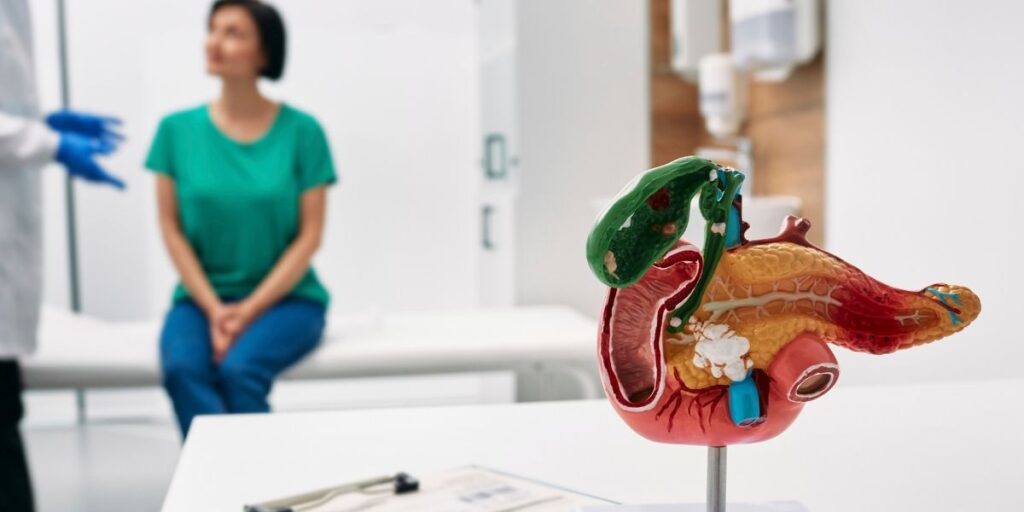
What is acute pancreatitis?
Damage to the enzymes in the pancreas and their uncontrolled activation lead to inflammation within the pancreas. This condition is called pancreatitis. Acute and chronic pancreatitis are two separate types of the disease, independent from each other.
What are the causes of acute pancreatitis?
Acute pancreatitis is a sudden inflammation of the pancreas. It is most commonly caused by stones in the bile duct or gallbladder, which block the drainage area of the bile duct, pancreatic duct, and duodenum, leading to inflammation of the pancreatic cells. The main cause of the disease is gallstones; the effect of alcohol is very minimal.
What are the symptoms of acute pancreatitis?
The disease often begins suddenly. It presents with symptoms such as intense upper abdominal pain radiating to the back in a belt-like pattern, nausea, vomiting, cold sweats, high fever, low blood pressure, and yellowing of the whites of the eyes.
How is acute pancreatitis treated?
The complications that cause acute pancreatitis are treated, and the underlying factors are eliminated. If there is a problem in the gallbladder, it is removed after the acute pancreatitis attack. This prevents the patient from experiencing another episode of acute pancreatitis.
What are the symptoms of acute pancreatitis?
Edematous pancreatitis is more common and progresses more mildly. The severe form of the disease is called necrotizing pancreatitis. In this condition, where the pancreatic cells die due to sudden inflammation, an abscess may form, and a serious situation can develop that affects the organs surrounding the pancreas. The superinfection that occurs because of dead tissue can lead to organ failure. The patient’s risk of death may rise up to 45%.
What is the importance of nutrition in acute pancreatitis?
Excessive alcohol consumption, as well as eating excessively fatty or large meals, can trigger acute pancreatitis.
How is acute pancreatitis treated?
The treatment method varies depending on the type of acute pancreatic inflammation. Edematous pancreatitis
In the treatment of edematous pancreatitis, the patient is given plenty of fluids. According to recent studies, the patient is also allowed to eat. During this process, pain medications are administered, and the condition is expected to resolve on its own.
In necrotizing pancreatitis, the accumulated fluids and abscess areas are mostly drained through interventional radiology and interventional endoscopy.