

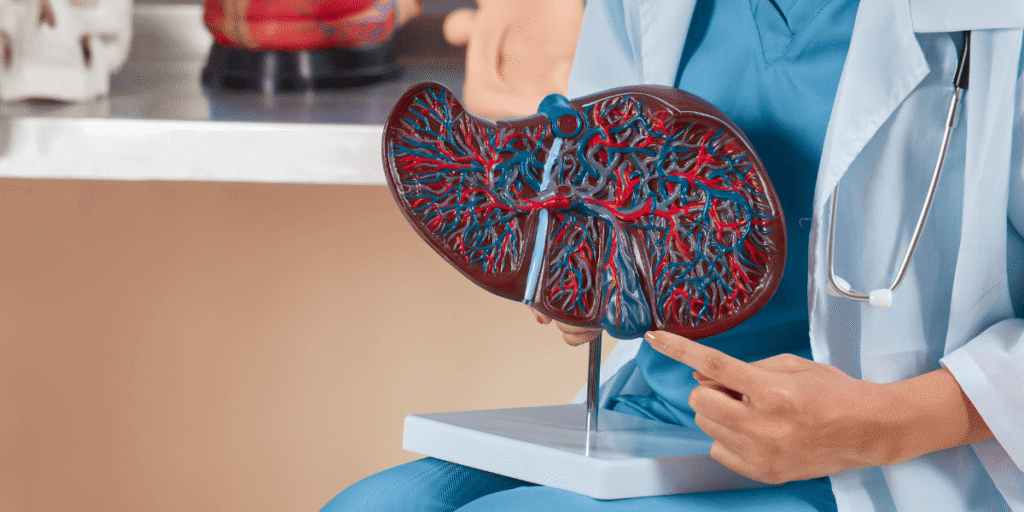
What is Liver Cancer
Liver cancer refers to malignant tumors that develop in the liver tissue. Primary cancers originating from the liver’s own cells and cancers that spread to the liver from other organs (metastatic cancers) are the most common liver tumors.
These tumors often do not cause symptoms in the early stages and are therefore usually diagnosed at an advanced stage. For this reason, early diagnosis and appropriate surgical treatment are of critical importance for patient survival and quality of life in liver cancer.
Types of Liver Cancer
Hepatocellular Carcinoma (HCC)
It is the most common primary liver cancer arising from the main liver cells (hepatocytes). It usually develops on the background of cirrhosis.
Risk factors include hepatitis B, hepatitis C, alcoholic liver disease, and non-alcoholic fatty liver disease (NAFLD).
Intrahepatic Cholangiocarcinoma
This is a rarer but aggressive type of cancer originating from the bile ducts within the liver. It often has an insidious course.
3. Hepatoblastoma
A rare liver tumor seen in children, typically diagnosed during infancy.
Metastatic Liver Cancer
Most tumors detected in the liver are actually metastases that have spread to the liver from other organs such as the colon, stomach, pancreas, or breast.
Such cases are evaluated using both systemic and surgical approaches.
Treatment Methods for Liver Cancer
The treatment plan is determined based on multiple factors, including the type and stage of the tumor, liver function, and the patient’s overall health status.
A multidisciplinary approach is vital during this process.
Surgical Treatment (Resection)
This approach is applied in patients whose tumors are confined to a specific region of the liver.
The tumor-bearing tissue is removed using techniques such as segmentectomy or lobectomy.
It is a curative (definitive) treatment method.
It is the most effective treatment option for HCC and cholangiocarcinoma.
Liver Transplantation
In appropriately selected patients (especially those with early-stage HCC), liver transplantation offers the best survival outcomes.
Note: Prof. Dr. Mert Erkan does not perform liver transplantation. This information is important for patient referral.
3. Local Treatments (Non-Surgical Options)
Radiofrequency ablation (RFA)
Microwave ablation (MWA)
Transarterial chemoembolization (TACE)
Transarterial radioembolization (TARE)
These treatments can be applied in early-stage disease or in patients who are not suitable for surgery.
Systemic Treatments (Medical Therapy)
Targeted therapies (such as sorafenib, lenvatinib, etc.)
Immunotherapies
These therapies are generally used in advanced-stage patients.
When Is Surgery Applicable?
Surgical treatment is preferred in patients who meet the following criteria:
The tumor is confined to a specific portion of the liver
Liver function (especially Child–Pugh A) is adequate
If cirrhosis is present, it is at an early stage
There is no spread to other organs
Prof. Dr. Mert Erkan performs patient-specific surgical procedures for liver tumors using minimally invasive (laparoscopic) or open surgical techniques.
Early Diagnosis Saves Lives in Liver Tumors
Because liver cancer often progresses silently, regular follow-up is crucial for individuals in high-risk groups.
Individuals who are hepatitis B or C carriers, patients with cirrhosis, or those with a family history of liver cancer should be particularly vigilant.