

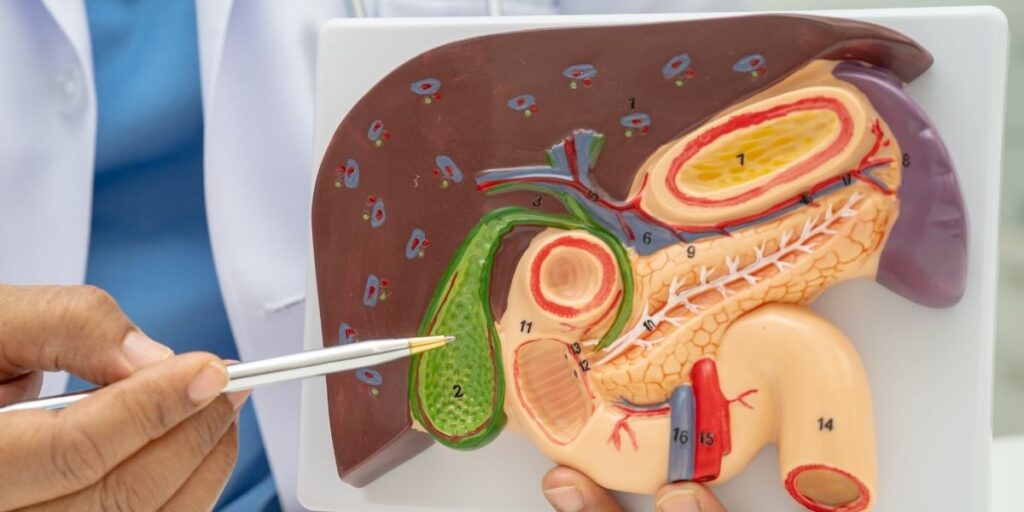
Choledocholithiasis is defined as the passage of small gallstones from the gallbladder into the bile duct, or, rarely, the formation of stones within the bile duct itself. It is a serious condition that can cause obstruction of the bile ducts and pancreatitis. Therefore, urgent intervention is required to remove the stones endoscopically from the bile ducts.
What are the causes of choledocholithiasis?
Conditions such as high estrogen levels, pregnancy, hormone therapy, birth control pills, obesity, and diabetes can lead to gallstone formation in the gallbladder, which can indirectly cause stones to pass into the bile duct. Choledocholithiasis is more common in women and in individuals over 40 years old.
What are the causes of choledocholithiasis?
Small stones usually do not cause many symptoms. However, pain in the upper right abdomen, especially after meals and radiating to the shoulder, is an important symptom of choledocholithiasis. Other possible symptoms include nausea, vomiting, fever, chills, jaundice in the skin and eyes, dark-colored urine, and pale-colored stools.
How is choledocholithiasis diagnosed?
In patients presenting with symptoms suggestive of bile duct stones, a detailed medical history is first taken. Radiological tests such as ultrasonography, computed tomography (CT), magnetic resonance imaging (MRI), and endoscopic retrograde cholangiopancreatography (ERCP) are then used. Blood tests include evaluating liver and gallbladder function through total and direct bilirubin, alkaline phosphatase, AST, ALT, and GGT levels.
How is choledocholithiasis treated?
Gallstones in the gallbladder are often detected incidentally. Small and few gallstones can be monitored without surgery; however, stones that pass into the bile duct and cause symptoms require interventional procedures or surgery. The most commonly used method is sphincterotomy via ERCP (endoscopic retrograde cholangiopancreatography), where the bile and pancreatic ducts are visualized endoscopically using a lighted tube. To remove the stone, a small incision called a sphincterotomy is made endoscopically, allowing the stone to be cleared into the small intestine. Other surgical methods involve removing the gallbladder and stones in the duct using either open or laparoscopic surgery.