

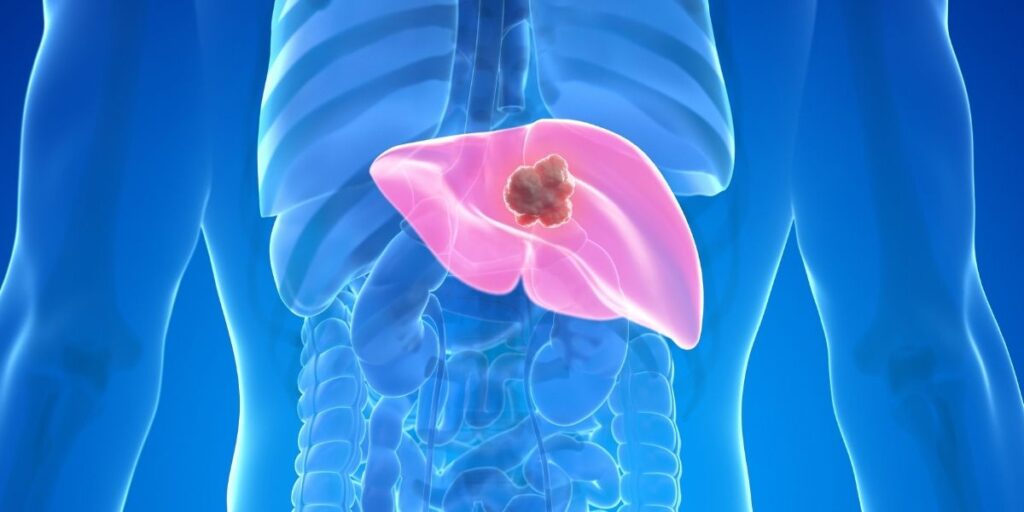
Liver metastasis refers to the spread of a cancer that originates in another organ (such as the colon, rectum, stomach, pancreas, breast, or lung) to the liver.
This spread usually occurs through the bloodstream, as the liver is one of the organs that filters a large portion of the body’s blood.
The vast majority of tumors detected in the liver are secondary (metastatic) tumors originating from other organs rather than from the liver’s own cells.
Which types of cancer metastasize to the liver?
The most common cancer types that metastasize to the liver include:
- Colon and rectal cancer (most common)
- Stomach cancer
- Pancreatic cancer
- Breast cancer
- Lung cancer
- Neuroendocrine tumors
- Melanoma (skin cancer)
According to the American Cancer Society (ACS), approximately 50% of patients with colorectal cancer develop liver metastases at some point during their lifetime.
How is the treatment plan determined for liver metastases?
When a tumor that has spread to the liver is detected, the treatment approach is determined based on the origin of the disease, the extent of spread, and the number and location of liver lesions.
The treatment plan is most often established by a multidisciplinary tumor board.
This team includes specialists such as surgeons, medical oncologists, gastroenterologists, radiologists, and pathologists.
Treatment options include:
Surgery (resection)
Systemic therapy (chemotherapy, targeted therapies)
Local treatments (ablation, embolization)
Occasionally liver transplantation (very rarely, in selected patients)
When can surgery be performed for liver metastases?
Surgery can be a curative (definitive) treatment option in appropriately selected patients.
Surgery for liver metastases is possible when the following criteria are met:
The number of tumors is limited (usually between 1 and 4)
The tumors are located in surgically resectable regions of the liver
A sufficient portion of healthy liver tissue can be preserved
There is no spread to other vital organs
The patient’s general health status is suitable for surgery
In liver metastases originating from colon and rectal cancer (colorectal liver metastases – CRLM), postoperative survival can exceed five years.
ESMO and NCCN guidelines recommend surgery as the first-line treatment in this patient group.
What are the non-surgical treatment options?
When surgery is not feasible, the following methods are considered:
Chemotherapy: Reduction of tumor size and control of disease spread
Targeted therapies: Drug planning based on KRAS/NRAS/BRAF mutation status
Radiofrequency ablation (RFA), microwave ablation (MWA)
TACE / TARE: Delivery of medication or radiation to the tumor via the liver’s vascular system
Conversion therapy: Metastases reduced by chemotherapy may later become resectable
Prof. Dr. Mert Erkan manages treatment processes for tumors that have spread to the liver—particularly colorectal liver metastases—including surgical resection, post-conversion surgical planning, and active participation in multidisciplinary treatment planning.
- Cerrahi rezeksiyon
- Konversiyon sonrası cerrahi planlama
- Multidisipliner tedavi planına aktif katılım gibi süreçleri yönetmektedir.
- Karaciğerin segmental yapısını çok iyi bilen ve bu alanda yurtdışı üst ihtisas yapmış bir cerrah olarak, karaciğerin en az hasarla en doğru şekilde ameliyat edilmesini sağlar.
Early Intervention Saves Lives in Liver Metastases
Although the term metastatic disease is often associated with hopelessness, liver metastasis surgery performed in appropriately selected patients can provide long and high-quality survival.
For this reason, every metastatic case should be evaluated in detail, and the possibility of surgery should not be overlooked.